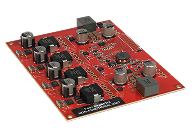
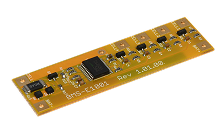
Industrial Power Systems Rugged solutions for demanding environments

When your equipment faces dust, moisture, vibration, and round-the-clock operation, you need power systems built to industrial standards. Energy Access delivers charging solutions that keep your operations running—from factory floors to remote field sites.
Built Tough, Built Smart

Industrial environments demand more than durability. Our solutions combine rugged construction with intelligent features like predictive maintenance alerts and remote monitoring capabilities.

Maximize Uptime

Minimize equipment downtime with hot-swappable batteries, multi-bay charging stations, and power systems that diagnose issues before they become problems.

Scale to Your Operations

From single handheld devices to entire fleets of industrial equipment, we engineer solutions that grow with your business.
REAL EXPERIENCE OVER THE DECADES

Industrial user-cases

Case Study: Rugged Field Equipment

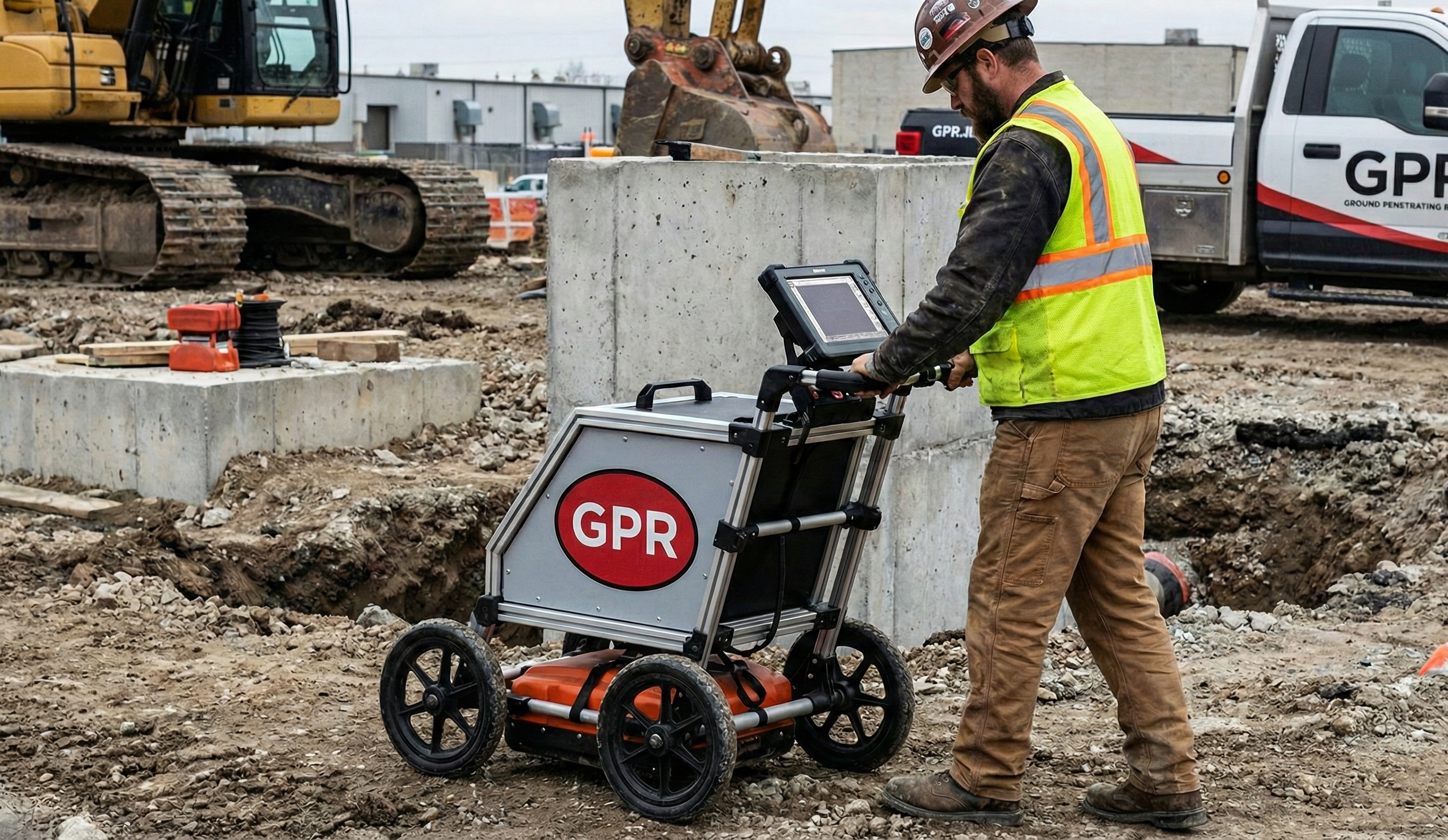
Challenge: An industrial OEM manufacturing ground penetrating radar needed reliable charging for standard battery packs used in harsh environments worldwide.

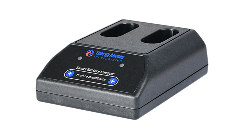
Solution: We provided our proven off-the-shelf charger with custom labeling, delivering industrial-grade reliability without the timeline and cost of full custom development.

Result: Years of reliable field performance in extreme conditions, from construction sites to archaeological digs, proving that sometimes the best custom solution leverages proven platforms.


Common uses for our technology

  • Handheld scanners and data collectors
  • Ground penetrating radar systems
  • Forklift and material handling equipment
  • Portable test and measurement devices
  • Emergency lighting systems
  • Remote monitoring equipment
  • Construction and surveying tools
Industrial-Strength Benefits
  • IP-rated enclosures for harsh environments
  • Vehicle mounting options for mobile operations
  • Fleet management capabilities
  • 24/7 duty cycles without overheating
  • Global voltage compatibility for international operations
OUR PRE-MANUFACTURED SOLUTIONS

Industrial related products

Looking for a custom solution?

Get started now

Your questions
answered...

How can I use USB to charge a battery?
The Universal Serial Bus (USB) standard has evolved dramatically from its introduction in 1995.  Designed originally as a replacement for the antiquated RS-232 interface, USB not only provided enhanced serial communications, it also allowed the ability to provide power to remote peripherals devices.  Originally, this was limited to a fixed 5V supply with a maximum current of 1000mA, but subsequent revisions have allowed for significant increases in both data speeds and power capabilities.

The present power standard allows for currents of up to 5 amps at a number of common voltage (ie. 5V, 9V, 12V, 15V, 20V, 24V, 36V and 48V) as well as several programmable modes known as PPS.  These enhancements necessitated that the number of wires in a fully implemented configuration expand from 4 to 12, with several of the additional lines being used to negotiate the voltage and current capabilities of the overall system.


While the full details are far too involved to be discussed here, these enhanced power configurations were included precisely with the idea of battery charging in mind.  In systems that have an internal power conversion stage, the USB supply is simple set to an appropriate fixed voltage level and the host’s internal charge controller manages the pack.  In systems that lack internal power conversion, this function can now be managed in the USB supply, provided the supply supports the appropriate PPS mode.  The host still needs to monitor its battery and then adjust the supply accordingly, however.
What is “intrinsic safety”?
Devices that are operated in potentially dangerous environments are often required to be certified for intrinsic safety. A typical example would be the use of two-way radios in a mining operation. Since mines can accumulate odorless, explosive gasses like methane, it essential that the battery powered radios not be able to provide a source of ignition. Equipment that is certified as intrinsically safe is required to undergo extensive scrutiny and testing to verify this fact.

In battery-powered systems, the certification requires that charge and discharge currents are (redundantly) limited to prevent over-voltage and over-current situations. Attention must be given to all creepage and clearance dimensions. Temperature rise of all parts is also considered. The shorting of any exposed terminals is not allowed to produce sparks. Various elements of the system may require potting or coatings to limit the effects of contaminants or possible mechanical damage.
What is the difference between a cell and a battery?
In popular usage, the terms “cell” and “battery” are often used interchangeably, though this is not technically correct.  In reality, a cell is the smallest discrete unit of electrochemical energy storage while a battery is a grouping of these cells.  (By way of analogy, an atom is the smallest discrete amount of an element while a molecule is some combination of atoms.)

When a consumer purchases a package of AA-cells at a retail store, each cell is a discrete electrochemical unit that produces about 1.5V.  Most devices that use these cells require more than 1.5V to operate, however.  To accommodate these higher voltage requirements, multiple cells are connected in series inside the device.  This combination forms a battery.

Most people are unaware that the little 9V batteries (commonly used in smoke detectors and portable radios) are true batteries in the technical sense.  They internally contain six small cells wired in series.  Likewise, most car batteries contain six cells packaged together as one unit.
What “standard” rechargeable batteries are available?
By far, the most common standard rechargeable batteries are the lead-acid variety used in automobiles. These come in a variety of sizes from multiple vendors, but are generally large, heavy and have a liquid electrolyte that may require service.

With the advent of laptop computers, a standard series of small rechargeable lithium ion batteries was developed that have since found a home in many kinds of handheld equipment and portable devices. These are available from multiple vendors in many sizes and voltages.

Typically these batteries use blade-style connectors for easy replacement and have internal intelligence that tracks the state of health of the pack. As batteries have become subject to increased regulation in the last decade, the use of (pre-certified) standard packs can significantly reduce development costs for new products.

Though there is no specific naming convention for these packs, the model numbers often contain the digit combinations 201, 202, 203 and 204 as a legacy of the original names.

A number of vendors also sell their own pre-certified “standard” batteries. While no additional certification may be required for these packs, they are only available from a single source.
What is a “smart” battery?
A “smart” battery is one that contains an internal fuel gauging circuit. By continually monitoring the current going into and out of the pack, the gauge is able to keep an accurate measure of how much energy is presently available.

Since this feature was part of the effort to standardize battery packs in the 1990s, an industry specification was developed that lays out how this, and other pack information, is stored and communicated. Collectively, this is known as the Smart Battery System (SBS) specification. The communications link is called the System Management Bus (SMBus).

The SBS specification allows for 36 different pieces of information about the pack. These include dynamic parameters such as voltage, current, temperature, and state of charge, as well as static parameters like the original design capacity and date of manufacture. See www.sbs-forum.org for more details.

SBS-compliant packs use a 2-wire communications scheme based on the I2C standard originally developed by Phillips. Larger packs, like those typically found in motive applications, often opt for some variant of the CAN communications used in automobiles. Lastly, there are also some proprietary, single-wire schemes, though these are used mostly in legacy applications.
What is GaN?
The name “GaN” comes from the chemical symbol for gallium-nitride, a semiconductor material used for making power transistors.

The earliest transistors were made from the semiconductor element germanium (chemical abbreviation Ge). As transistor technology took off, however, there was a strong push to transition over to silicon (Si) as it is much better behaved and much more plentiful. And for the next 70 years, silicon received the vast bulk of the research and development effort.

Silicon and germanium are not the only viable semiconducting materials, however. There are also combinations like silicon carbide (SiC) and gallium phosphide (GaP) which have found niche applications. Unfortunately, they are often difficult to process using the standard silicon tools and techniques.

In today’s highly digital world, most switching applications are managed by silicon MOSFETs (Metal-Oxide-Semiconductor Field-Effect Transistor). These have improved markedly since their introduction in the 1970s, and have now reached maturity with little room for further improvement. One of their biggest limitations, however, is power loss during switching transitions, and their switching speed is limited by their (high) gate capacitance.

MOSFETs made from gallium nitride (GaN) can have characteristics similar to the best ones made from silicon but can switch considerably faster. For this reason, they are rapidly being adopted in the manufacture of switching power supplies, motor drives, etc. Since the switching speed also governs the size of the other necessary power parts, GaN-based supplies can be much smaller than their silicon counterparts. It is not uncommon to get a space saving of 50%.
What regulatory restrictions affect my battery?
Because they are simultaneously electrical devices and chemical devices, batteries merit special scrutiny from regulatory agencies. This is exacerbated by the conflicting requirements of the “ideal” pack. Users expect them to be small, light, robust and have high energy density. Unfortunately, compacting a lot of (potential) energy into a small package is inherently risky.

To begin with, UN DOT 38.3 regulates the safety of transporting batteries. It mandates testing for short-circuiting, crushing, thermal cycling, vibration, shock and altitude change among other factors.

IEC 66281 is an expanded version of UN DOT 38.3 that also includes drop testing. This certification is required for international shipping.

UL 1642 again covers many of the same tests, but focuses more on chemical and electrical hazards at the cell level as well as the safety of user serviceability.

IEC 62133 is the expanded international version of UL 1642.

UL 2271 pertains to batteries used in e-bikes and scooters.

In medical applications, batteries must meet the safety requirements of IEC 62133, UL 2054, ISO 13485, and IEC 60601-1.

Operation in hazardous environments may require additional certifications. Likewise with batteries that exceed 60V.
How do I ship a battery?
Generally speaking, any battery is supposed to be at a 30% state of charge or less when it is shipped in order to minimize potential risk.

If the pack is shipped via air, it needs to be in a special container that both protects it from crushing and shock and will contain a fire if the pack should experience a thermal event. Air shipments require special labeling that call out the potential hazard. Batteries should never be shipped on commercial passenger planes.

If the pack is shipped by land or ocean the carrier must be made aware they are carrying hazardous material.

Passengers may carry a fully charged laptop battery on a commercial plane as long as it is inside the computer and does not exceed 100 watt-hours in capacity.
Have a question?
Success checkmark icon
Thank you!
Your message has been sent
Oops! Something went wrong while submitting the form.

Let’s help you find exactly what you’re 
looking for.

Thank you! Your submission has been received!
Oops! Something went wrong while submitting the form.
Arrow icon
See Security products
Or get in touch directly with us to ask another question, we will be happy to help business.