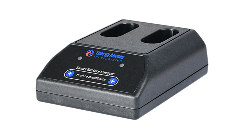
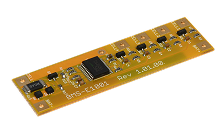
A “smart” battery is one that contains an internal fuel gauging circuit. By continually monitoring the current going into and out of the pack, the gauge is able to keep an accurate measure of how much energy is presently available.
Since this feature was part of the effort to standardize battery packs in the 1990s, an industry specification was developed that lays out how this, and other pack information, is stored and communicated. Collectively, this is known as the Smart Battery System (SBS) specification. The communications link is called the System Management Bus (SMBus).
The SBS specification allows for 36 different pieces of information about the pack. These include dynamic parameters such as voltage, current, temperature, and state of charge, as well as static parameters like the original design capacity and date of manufacture. See
www.sbs-forum.org for more details.
SBS-compliant packs use a 2-wire communications scheme based on the I
2C standard originally developed by Phillips. Larger packs, like those typically found in motive applications, often opt for some variant of the CAN communications used in automobiles. Lastly, there are also some proprietary, single-wire schemes, though these are used mostly in legacy applications.